
EN 13501-1 Euroclasses: The Short Answer
The Euroclass letter is decided by test results, not by a datasheet claim. A1 and A2 are decided by the non-combustibility furnace (EN ISO 1182) and the oxygen bomb calorimeter (EN ISO 1716). Classes B, C and D are decided by the SBI test (EN 13823) at FIGRA limits of 120, 250 and 750 W/s. Class E is decided by the small flame test (EN ISO 11925-2) alone, and Class F simply means no performance was determined. Smoke (s1–s3) and droplets (d0–d2) codes complete the string, so A2-s1,d0 is a complete classification, while “fire rated” on its own means nothing in Europe.
What EN 13501-1 Is — and Which Edition Applies
EN 13501-1 is the European standard for classifying the reaction to fire of construction products: how much a product feeds a fire in its early stage. It is the classification framework behind CE marking of construction products under the Construction Products Regulation (EU) No 305/2011. The current edition is EN 13501-1:2018, approved by CEN on 9 November 2018 and published in December 2018, superseding EN 13501-1:2007+A1:2009 1.
The standard treats three product categories separately: construction products excluding floorings, floorings, and linear pipe thermal insulation products. Power, control and communication cables are excluded from EN 13501-1 and classified under EN 13501-2’s sibling, EN 13501-6 2. Where a manufacturer does not want to declare reaction-to-fire performance, the standard supports the NPD (No Performance Determined) option under the CPR [2].
One distinction causes more procurement damage than any other: reaction to fire is not fire resistance. EN 13501-1 describes how a material contributes to a fire. EN 13501-2 describes how long a wall, floor or door holds a fully developed fire back, in minutes. A material cannot carry an EI 60 rating, and an assembly cannot be “A2-s1,d0”. When a tender mixes the two, every quote you receive answers a slightly different question.
How the Class String Is Built
A complete Euroclass is a short string, and every character carries test evidence. Take B-s1,d0: the letter B is the main class for contribution to fire, s1 is the smoke production class, and d0 is the flaming droplets class. A1 and F never carry subscripts; classes A2 to D carry both s and d codes; class E carries only a d2 code. Floor coverings add the subscript fl (A1fl to Ffl) and linear pipe insulation adds L (A1L to FL).
| Example string | How to read it |
|---|---|
| A1 | Non-combustible; no additional classes exist for A1 |
| A2-s1,d0 | Very limited combustibility; lowest smoke band; no flaming droplets in the SBI test |
| B-s2,d1 | Very limited contribution to fire; medium smoke band; droplets that do not persist beyond 10 s |
| D-s2,d0 | Medium contribution to fire; medium smoke; no flaming droplets |
| E-d2 | Passed the small flame test only; droplet performance not demonstrated |
| Bfl-s1 | Flooring class; radiant panel route; lowest smoke band |
A class belongs to a build-up, not to a product name. Change the thickness, the substrate, the air gap or the fixing, and the classification report may no longer describe what is on the pallet.
The Class Ladder: What A1 to F Actually Mean
| Class | Meaning | Typical examples |
|---|---|---|
| A1 | Non-combustible; contributes nothing at any stage of the fire | Concrete, steel, glass, stone wool, ceramics |
| A2 | Very limited combustibility; negligible contribution, some smoke allowed | Gypsum boards, mineral composites with small organic content |
| B | Very limited contribution to fire | High-grade FR-treated materials |
| C | Limited contribution to fire | FR-treated timber products |
| D | Acceptable contribution to fire | Untreated timber boards |
| E | Resists a small flame for a short time only | Some textiles, thin polymer sheets |
| F | No performance determined, or failed Class E | Untested or easily flammable products |
Two regulatory facts make this ladder worth memorising. In England, Regulation 7(2) of the Building Regulations 2010 (as amended by SI 2018/1230, in force from 21 December 2018) bans combustible materials in the external walls of relevant buildings 18 metres or taller, requiring A2-s1,d0 or A1 6. Outside the EU, the classes travel well: Singapore’s Civil Defence Fire Code, for example, maps EN classes directly against the old BS 476 spread-of-flame classes in its specification tables 7.
Where the Old National Classes Went
EN 13501-1 replaced a patchwork of national systems, and the old names still surface in tenders and legacy datasheets. British Standard Class 0 and Class 1 (BS 476 Parts 6 and 7), German classes B1 and B2 (DIN 4102), French M-ratings and similar schemes have no formal equivalence table to the Euroclasses: a Class 0 material is roughly a B or better, but “roughly” is not a classification, and no single conversion holds across product types. Two practical consequences follow. First, when a specification cites a national class, ask the supplier to re-declare the product to EN 13501-1; every harmonised product standard under the CPR now expects exactly that. Second, some national test rigs remain in productive use inside the Euroclass framework — Germany’s Brandschacht (DIN 4102-15/16), for example, is still required for certain A2 variants of mineral wool insulation, and our Brandschacht test apparatus serves laboratories that carry both regimes. Treating old and new classes as interchangeable currencies is one of the quiet ways substitutions enter a project.
The Five Tests Behind Every Euroclass
Only five test methods generate every Euroclass 4: the non-combustibility furnace (EN ISO 1182), the bomb calorimeter (EN ISO 1716), the Single Burning Item test (EN 13823), the small flame ignitability test (EN ISO 11925-2) and, for floorings, the radiant panel (EN ISO 9239-1). Which combination applies — and the numerical thresholds inside each — is what separates the classes.
The Non-Combustibility Pair: EN ISO 1182 and EN ISO 1716
EN ISO 1182 places a cylindrical specimen (Ø 45 × 50 mm) into a tube furnace stabilised at 750 °C and watches three things: temperature rise, mass loss and sustained flaming. EN ISO 1716 burns a prepared sample in an oxygen bomb calorimeter and measures the gross calorific potential (PCS). The A1 and A2 limits 3:
| Criterion | Class A1 | Class A2 |
|---|---|---|
| EN ISO 1182 temperature rise | ≤ 30 °C | ≤ 50 °C |
| EN ISO 1182 mass loss | ≤ 50 % | ≤ 50 % |
| Sustained flaming | None | ≤ 20 s |
| EN ISO 1716 PCS (homogeneous / substantial components) | ≤ 2.0 MJ/kg | ≤ 3.0 MJ/kg |
For non-homogeneous products, A2 additionally applies PCS limits to external and internal non-substantial components (≤ 4.0 MJ/m² each) and to the product as a whole (≤ 3.0 MJ/kg) 5. Both tests are benchtop-scale and are the two workhorses of any A1/A2 classification programme; they are exactly what our non-combustibility test apparatus and oxygen bomb calorimeter are built for.

The SBI Test: What Separates A2, B, C and D
EN 13823 is the decisive test for classes A2 to D. Two panels form a corner, a 30 kW propane burner burns against the wing joint for 20 minutes, and the test records FIGRA (the fire growth rate index), THR600s (total heat release in 600 s), lateral flame spread (LFS), smoke (SMOGRA, TSP600s) and flaming droplets [4]. FIGRA describes how quickly heat release accelerates during the run — the lower the index, the slower the fire grows on the specimen — which is why it, rather than peak heat release, carries the classification. The thresholds that separate the classes [3][5]:
| Class | FIGRA | LFS | THR600s | EN ISO 11925-2 |
|---|---|---|---|---|
| A2 | ≤ 120 W/s | < edge | ≤ 7.5 MJ | — |
| B | ≤ 120 W/s | < edge | ≤ 7.5 MJ | required |
| C | ≤ 250 W/s | < edge | ≤ 15 MJ | required |
| D | ≤ 750 W/s | — | ≤ 15 MJ | required |
A2 and B share the SBI limits; A2 is separated by the stricter ISO 1182/1716 route it must also pass. For class D, FIGRA is computed from the 0.4 MJ threshold. Note that a product offered as “B or better” is not a small step along a scale — A2 to B crosses from the non-combustibility test regime into the combustible regime.
Smoke and droplet codes come from the same SBI run (the small flame test adds one more rule) [3][5]:
| Code | Criteria |
|---|---|
| s1 | SMOGRA ≤ 30 m²/s² and TSP600s ≤ 50 m² |
| s2 | SMOGRA ≤ 180 m²/s² and TSP600s ≤ 200 m² |
| s3 | Neither s1 nor s2 |
| d0 | No flaming droplets/particles within 600 s |
| d1 | No flaming droplets/particles persisting longer than 10 s |
| d2 | Not d0 or d1; ignition of the paper in EN ISO 11925-2 also gives d2 |
Our step-by-step guide to the SBI test procedure (EN 13823) covers the chamber setup and timeline in detail, and the single burning item test system implements the full measurement chain.

The Small Flame Test: EN ISO 11925-2
EN ISO 11925-2 applies a small directional flame to a vertically mounted specimen (250 × 90 mm). For class E, the flame is applied for 15 s and the flame tip must not spread more than 150 mm within 20 s [3]. For classes B, C and D the same test is a precondition: 30 s exposure, flame spread limited to 150 mm within 60 s [3]. If the filter paper beneath the specimen ignites, the product lands in d2 regardless of its other results. Class E rests on this test alone, which is why E is the natural entry class for thin polymer sheets and textiles that would fail the SBI route on cost. The small flame source ignitability tester is the corresponding benchtop instrument.

Which Test Decides Each Class — Full Matrix
The matrix below is the one-glance answer to “which test decides each class” [4]. Read it by column: every class from A2 upward leans on the SBI, every class from B upward leans on the small flame test, and only the top two classes touch the furnace and the calorimeter.
| Class | EN ISO 1182 | EN ISO 1716 | EN 13823 (SBI) | EN ISO 11925-2 | Additional classes |
|---|---|---|---|---|---|
| A1 | required | required | — | — | none |
| A2 | required | required | required | — | s1–s3, d0–d2 |
| B | — | — | required | required | s1–s3, d0–d2 |
| C | — | — | required | required | s1–s3, d0–d2 |
| D | — | — | required | required | s1–s3, d0–d2 |
| E | — | — | — | required | d2 only |
| F | — | — | — | — | no performance determined |
Matrix after the test-per-class scheme published by Efectis [4]; F corresponds to failing Class E criteria or not testing at all.
Floorings and Linear Pipes: The fl and L Suffixes
Floor coverings follow the same ladder with an fl subscript, but the SBI is replaced by the radiant panel test EN ISO 9239-1, which measures the critical heat flux (CHF) at which flame spread stops [3]. Flooring classes carry smoke codes (s1/s2) but never droplet codes — a floor cannot drip onto the room below.
| Class | Deciding tests and thresholds |
|---|---|
| A1fl | EN ISO 1182 + EN ISO 1716 (same limits as A1) |
| A2fl | Non-combustibility/calorific route + EN ISO 9239-1 CHF ≥ 8.0 kW/m² |
| Bfl | EN ISO 9239-1 CHF ≥ 8.0 kW/m² + EN ISO 11925-2 (15 s exposure) |
| Cfl | EN ISO 9239-1 CHF ≥ 4.5 kW/m² + EN ISO 11925-2 |
| Dfl | EN ISO 9239-1 CHF ≥ 3.0 kW/m² + EN ISO 11925-2 |
| Efl | EN ISO 11925-2 only |
Linear pipe insulation follows the L ladder with relaxed SBI limits (for example A2L allows FIGRA up to 270 W/s) [3]. The horizontal radiant panel apparatus for the flooring route is our flooring radiant panel test apparatus.

Classes Without Further Testing (CWFT)
Not every A1 product was ever put in a furnace. Commission decisions under the CPR designate product families whose composition alone secures a class — the CWFT (Classes Without Further Testing) mechanism, first established by Commission Decision 2000/147/EC. Mineral wool, cement, glass and ceramics with less than 1 % organic content can be declared A1 without testing [3]. For buyers this matters in two directions: a CWFT class is a legitimate classification for CE marking, and conversely a supplier claiming CWFT status outside the designated product families is not providing evidence.
How to Read (and Check) a Classification Report
Ask for the classification report, not a summary certificate. A conforming report names the product, its thickness, the substrate, and the mounting and fixing used in the test (standardised in EN 15715), together with the field of application — direct or extended [4]. The class is valid for the tested build-up; extended application rules may cover thicker or thinner variants, but they must be stated. Check three things before relying on a quote: that the report references EN 13501-1:2018, that the full class string appears with its s and d codes, and that the end-use mounting in the test matches your installation.
Five Procurement Mistakes With Euroclasses
| Mistake | What to do instead |
|---|---|
| Accepting “fire rated” as a class | Ask for the full string, e.g. B-s1,d0, in writing |
| Treating reaction to fire as fire resistance | Keep EN 13501-1 (materials) and EN 13501-2 (assemblies) separate |
| Comparing only the letter | s1 vs s2 is a factor of six on smoke growth rate; read all three parts |
| Assuming a class covers every thickness and substrate | Check the classification report’s field of application |
| Treating F as a normal grade | F means no performance determined; an untested product looks identical on paper |
Frequently Asked Questions
What is the current version of EN 13501-1?
The current edition is EN 13501-1:2018, approved by CEN on 9 November 2018 and published in December 2018. It supersedes EN 13501-1:2007+A1:2009, which many older datasheets and product pages still quote. If a certificate or report cites the 2007 edition, ask the supplier for a classification against the 2018 edition before accepting it, since the classification criteria should be evaluated against the current document.
What does A2-s1,d0 actually mean?
A2-s1,d0 means the product has very limited combustibility (Class A2), produces smoke in the lowest band (s1: SMOGRA ≤ 30 m²/s² and total smoke production ≤ 50 m² over 600 s), and produced no flaming droplets in the SBI test (d0). The string is the complete classification. It is the minimum class required for external wall materials on relevant buildings 18 metres or taller in England under Regulation 7(2).
Which tests are required for a Class B rating?
Class B requires the SBI test EN 13823 with FIGRA ≤ 120 W/s, lateral flame spread not reaching the specimen edge, and total heat release in 600 s ≤ 7.5 MJ, plus the small flame test EN ISO 11925-2 with 30 s exposure and flame spread limited to 150 mm within 60 s. The SBI run also delivers the smoke (s1–s3) and droplet (d0–d2) additional classes that complete the string.
Is every product with an A1 rating tested in the ISO 1182 furnace?
No. The CWFT mechanism lets designated product families be classified A1 on composition alone: mineral wool, cement, glass and ceramics with less than 1 % organic content. A Class A1 claim can therefore come from a Commission decision rather than a test report. For products outside those families, A1 always requires passing both EN ISO 1182 and EN ISO 1716.
What is the difference between EN 13501-1 and EN 13501-2?
EN 13501-1 classifies reaction to fire — how much a material contributes to a fire in its early stage — using classes A1 to F with smoke and droplet codes. EN 13501-2 classifies fire resistance — how long a construction element such as a wall, floor or door keeps its load-bearing capacity, integrity and insulation (R, E and I criteria), expressed in minutes such as EI 60. Materials get EN 13501-1 classes; assemblies get EN 13501-2 classes.
How are floor coverings classified under EN 13501-1?
Floor coverings carry the same letters with an fl subscript, from A1fl to Ffl. The SBI test is replaced by the radiant panel test EN ISO 9239-1, which measures the critical heat flux: Bfl requires CHF ≥ 8.0 kW/m², Cfl ≥ 4.5 kW/m², and Dfl ≥ 3.0 kW/m², each combined with the small flame test. Flooring classes receive smoke codes s1 or s2 but never droplet codes.
What equipment does a laboratory need to classify products to EN 13501-1?
The full chain is five instruments: a non-combustibility furnace for EN ISO 1182, an oxygen bomb calorimeter for EN ISO 1716, a single burning item chamber for EN 13823, a small flame ignitability tester for EN ISO 11925-2, and a flooring radiant panel for EN ISO 9239-1. A laboratory that owns the first four can classify every non-flooring Euroclass from A1 to E and verify supplier claims in house.
Conclusion: How to Read a Euroclass in Ten Seconds
- Read the full string, never the letter alone — s and d codes are part of the class.
- A1/A2 were decided in the furnace and the calorimeter; B/C/D in the SBI corner; E by a small flame; F by nothing at all.
- Check the edition (2018), the field of application, and the mounting in the classification report.
- Match the class to the regulation that applies to your project, not to a generic “fire rated” claim.
If you are building or upgrading a laboratory that classifies products to EN 13501-1, BRT manufactures the complete chain — non-combustibility furnace, oxygen bomb calorimeter, SBI system and small flame testers — as single instruments or as an integrated suite. Tell us your product type and target class, and our engineers will size the equipment set accordingly.
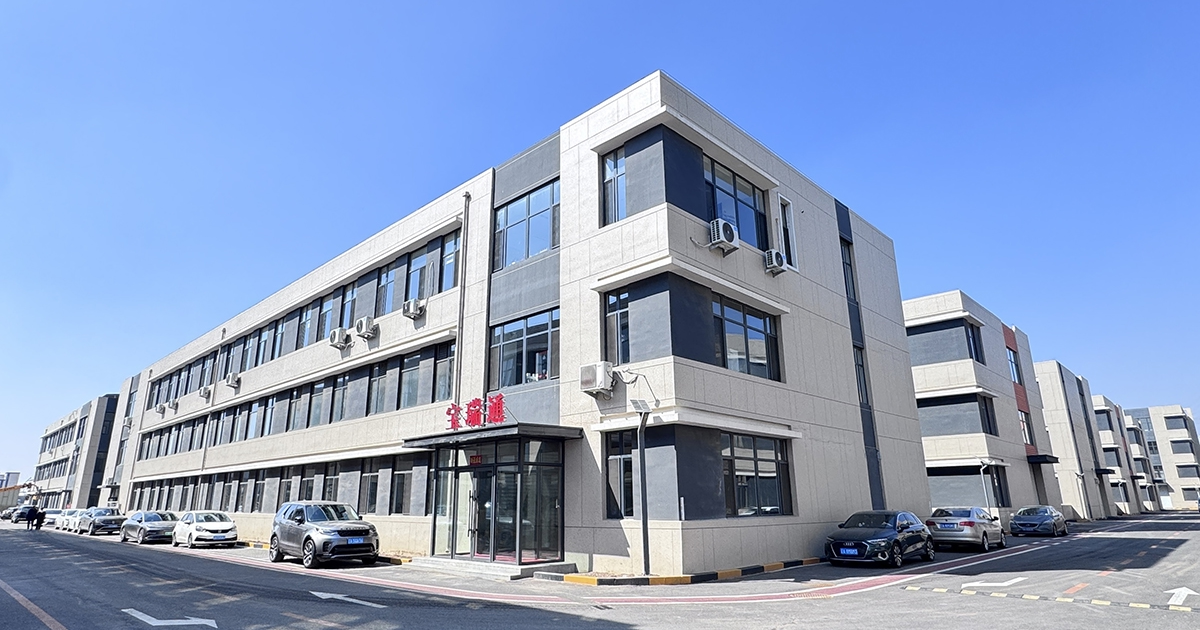
About BRT: Shenyang Baoruitong Automation Equipment Co., Ltd. (BRT) manufactures fire and flammability testing equipment — including SBI test systems, non-combustibility apparatus, oxygen bomb calorimeters and ignitability testers — for laboratories in China and export markets. This guide was prepared by the BRT engineering team based on the published editions of the standards cited below.


[…] together — which test decides which letter, and where the SBI takes over — is set out in our EN 13501-1 Euroclass guide, and the two articles are designed to be read as a pair: that one answers “which […]
[…] the bomb calorimeter, B–D from the SBI test, and E from the small flame test, as set out in our EN 13501-1 Euroclass guide. LOI lives one level down: it is the designated screening and quality-control method inside product […]