CLASS BY CLASS
The EN 13501-1 Reaction-to-fire Classification
The current edition is EN 13501-1:2018. Classification is derived from test data, never assigned directly: a laboratory runs the methods listed for the target class, the notified body compares the numbers with the criteria, and the class is written into the classification report. Construction products and flooring follow two different test routes, which is why a flooring lab and a wall-panel lab do not own the same equipment.
- A1 (Non-combustible): Does not contribute to fire at any stage (e.g., stone, steel).
- A2 (Very limited contribution): Strictly restricted heat release (e.g., certain gypsum boards).
- B (Combustible, limited contribution to fire): Strong restriction on development despite minor ignition (e.g., treated wood).
- C (Combustible, minor contribution to fire): Moderate heat release (e.g., thicker polymer panels with additives).
- D (Combustible, contributes to fire): Acceptable performance under baseline conditions (e.g., untreated wood).
- E (Combustible, will only resist a small flame for a few seconds): Resists a small flame briefly.
- F (No performance determined): Materials that have not been classified or have not met minimum requirements of class E.
HOW TO CHOOSE
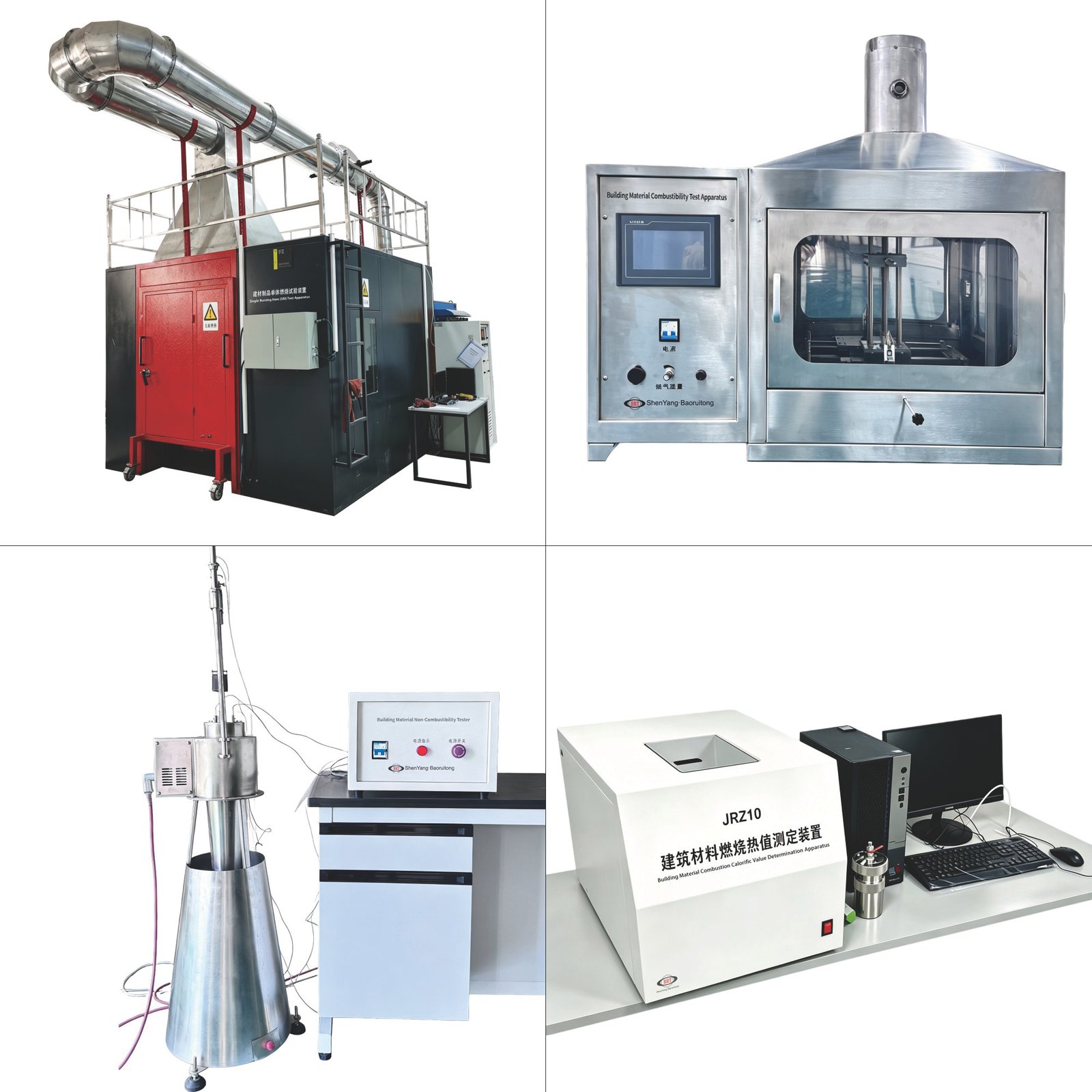
The EN 13501-1 Reaction-to-fire Classification Test Equipment
| Testing Name | Non-Combustibility Test | Gross Heat of Combustion Test | Small Flame Source Test | Single Burning Item (SBI) Test |
|---|---|---|---|---|
| Testing Equipment |  |  |  | 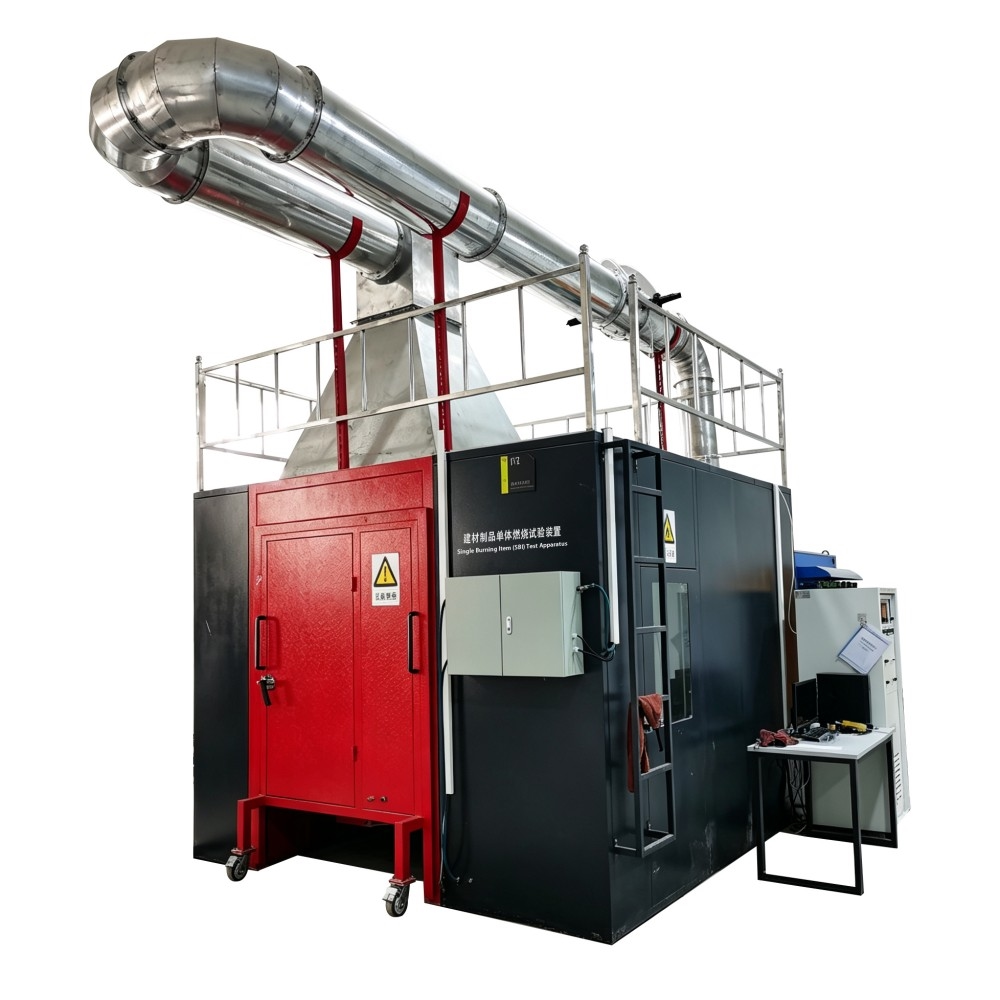 |
| Standard No. | EN ISO 1182 | EN ISO 1716 | EN ISO 11925-2 | EN 13823 |
| A1 | ✓ | ✓ | ✕ | ✕ |
| A2 | ✓ | ✓ | ✕ | ✓ |
| B | ✕ | ✕ | ✓ | ✓ |
| C | ✕ | ✕ | ✓ | ✓ |
| D | ✕ | ✕ | ✓ | ✓ |
| E | ✕ | ✕ | ✓ | ✕ |
| F | ✕ | ✕ | ✓ | ✕ |
Smoke (s1–s3) and flaming-droplet (d0–d2) sub-classes come out of the same SBI run — they are not separate tests. If your customers ask for “A2-s1,d0”, a single SBI system produces both suffixes.
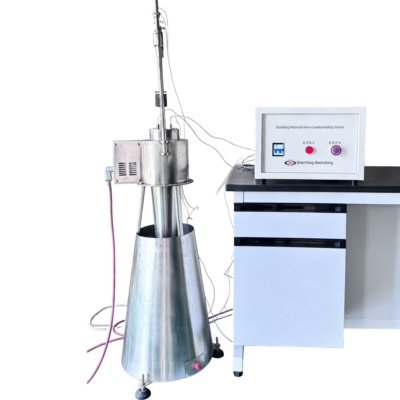
Non-combustibility tester
JBR20 · 750 °C tube furnace
Decides whether a product can be called non-combustible at all. A 40 × 50 mm specimen sits in the furnace for the whole run while two thermocouples track the rise.
| Criterion | A1 | A2 |
|---|---|---|
| Temperature rise ΔT | ≤ 30 °C | ≤ 50 °C |
| Mass loss Δm | ≤ 50 % | ≤ 50 % |
| Sustained flaming | none reaching 5 s | ≤ 20 s |
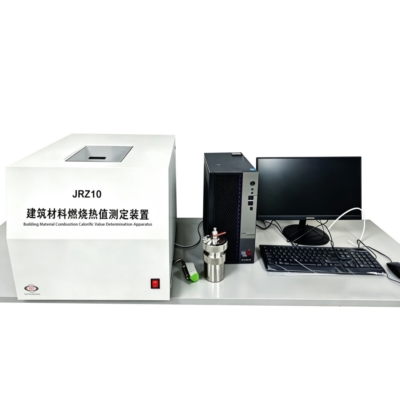
JRZ10 oxygen bomb calorimeter
Oxygen bomb calorimeter
JRZ10 · gross heat of combustion
The second line of evidence for A1 and A2. Burn a sample in an oxygen bomb and measure the gross calorific value — no PCS, no A1 claim.
PCS measured per EN ISO 1716
A1 threshold PCS ≤ 2.0 MJ/kg, A2 ≤ 3.0 MJ/kg
Water-jacket stability drives repeatability
Result feeds straight into the classification report
A1 · A2 evidence
| Parameter | A1 | A2 |
|---|---|---|
| PCS — homogeneous products and substantial components | ≤ 2.0 MJ/kg | ≤ 3.0 MJ/kg |
| PCS — external non-substantial layers | ≤ 2.0 MJ/m² | ≤ 4.0 MJ/m² |
| PCS — internal non-substantial layers | ≤ 1.4 MJ/m² | ≤ 4.0 MJ/m² |
| Product as a whole | — | ≤ 3.0 MJ/kg |
| PCS is the gross heat of combustion at constant volume. A1 and A2 both need the ISO 1182 furnace result as well; A2 additionally needs the SBI (EN 13823). | ||
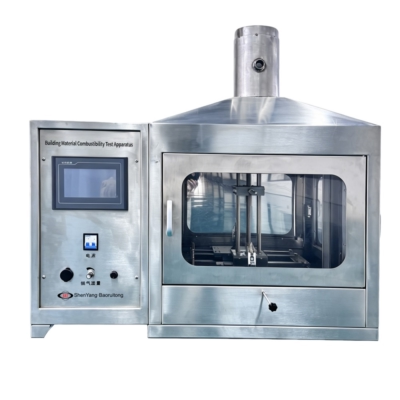
Single flame source test ignitability tester
Single flame source tester
JCKR · 15 s / 30 s flame exposure
The gatekeeper for B to F. A 20 mm flame hits a vertical specimen for 15 s or 30 s; if the tip passes 150 mm, the class is gone before the SBI even runs.
| Parameter | B | C | D | E |
|---|---|---|---|---|
| Flame exposure time | 30 s | 30 s | 30 s | 15 s |
| Flame spread Fs | ≤ 150 mm within 60 s | ≤ 150 mm within 60 s | ≤ 150 mm within 60 s | ≤ 150 mm within 20 s |
| Specimen: 250 × 90 mm, mounted vertically · surface attack, plus edge attack where the end use requires it | ||||
| Filter paper ignited beneath the specimen: the product moves to droplet class d2 — the main class itself is not affected | ||||
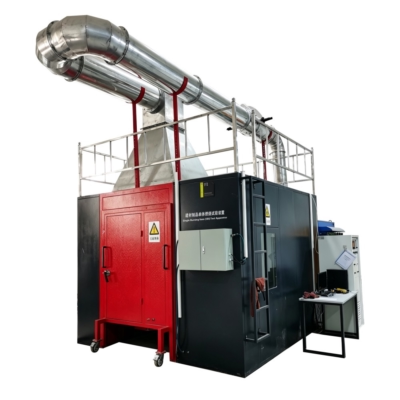
JCDT single burning item test system
Single burning item test equipment
JCDT · 30 kW corner fire, 20 minutes
One run produces FIGRA, THR600s, SMOGRA and TSP — the numbers behind four classes and both suffixes. It also sets the building: about 3 × 3 m with 4.5 m clear height.
| Parameter | A2 | B | C | D |
|---|---|---|---|---|
| FIGRA0.2MJ (W/s) | ≤ 120 | ≤ 120 | ≤ 250 | ≤ 750 |
| THR600s (MJ) | ≤ 7.5 | ≤ 7.5 | ≤ 15 | no limit |
| LFS (lateral flame spread) | < edge | < edge | < edge | < edge |
| s1 / s2 (SMOGRA, TSP600s) | s1: SMOGRA ≤ 30 m²/s² and TSP600s ≤ 50 m² · s2: SMOGRA ≤ 180 and TSP600s ≤ 200 · s3: neither | |||
| d0 / d1 / d2 | d0: no flaming droplets within 600 s · d1: none persisting beyond 10 s · d2: neither | |||
Related Reaction to Fire Test Equipment


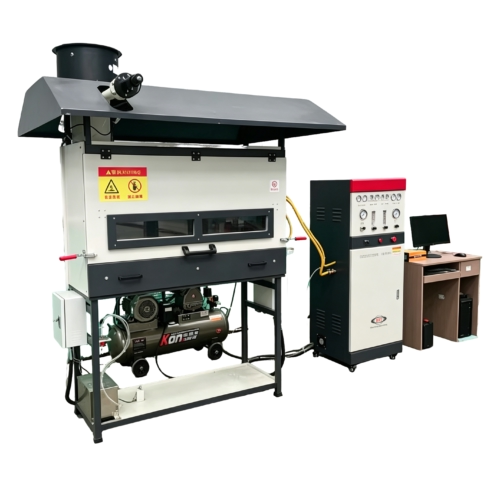


Calibration, conditioning and assessment
Buying these rigs is the easy half. The other half is what an ISO 17025 assessor actually looks at — and all three routines below are worth designing in from day one.
Customised Hardware and Software, Delivered as One System
No two laboratories have the same room, the same power grid or the same reporting chain — so no two BRT systems leave the factory identical. Every rig on this page is built to order. On the hardware side, furnace and chamber dimensions, the gas train, electrical supply and extraction interfaces are matched to your building and your target standards. On the software side, the control and data platform is configured around your workflow: result templates, the calculation chains behind FIGRA, ΔT and CHF, and data export formatted for classification reports and your LIMS.

